

SparkFun ESP8266 Thing Development Board with WiFi, USB, 802.11b/g/n, 4MB Flash, LiPo Charger, FTDI USB-to-Serial, 3.3V Regulator, U.FL Connector, PCB Trace Antenna, Headers, On/Off Switch
Product Description
SparkFun ESP8266 Thing Development Board with WiFi, USB, 802.11b/g/n, 4MB Flash, LiPo Charger, FTDI USB-to-Serial, 3.3V Regulator, U.FL Connector, PCB Trace Antenna, Headers, On/Off Switch
- All module pins broken out, On-board LiPo charger/power supply
- 802.11 b/g/n, Wi-Fi Direct (P2P), soft-AP
- Integrated TCP/IP protocol stack
- ntegrated TR switch, balun, LNA, power amplifier and matching network, Integrated PLLs, regulators, DCXO and power management units, Integrated low power 32-bit CPU could be used as application processor
- +19.5dBm output power in 802.11b mode
The SparkFun ESP8266 Thing is a relatively simple board. The pins are broken out to two parallel, breadboard-compatible rows. USB and LiPo connectors at the top of the board provide power - controlled by the nearby ON/OFF switch. LEDs towards the inside of the board indicate power, charge, and status of the IC. The ESP8266's maximum voltage is 3.6V, so the Thing has an onboard 3.3V regulator to deliver a safe, consistent voltage to the IC. That means the ESP8266's I/O pins also run at 3.3V, you'll need to level shift any 5V signals running into the IC. Also, with a little extra effort, the SparkFun ESP8266 Thing can be programmed using Arduino
A 3.3V FTDI Basic is required to program the SparkFun ESP8266 Thing, but other serial converters with 3.3V I/O levels should work just fine as well. The converter does need a DTR line in addition to the RX and TX pins.
Technical Specifications
You might also like
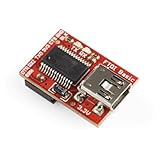
SparkFun FTDI Basic Breakout - 3.3V

HiLetgo FT232RL FTDI Mini USB to TTL Serial Converter Adapter Module 3.3V 5.5V FT232R Breakout FT232RL USB to Serial Mini USB to TTL Adapter Board for Arduino

HiLetgo 2pcs ESP8266 NodeMCU CP2102 ESP-12E Internet WiFi Development Board Open Source Serial Wireless Module (Pack of 2PCS)

SparkFun ESP32 Thing Developement Board WiFi and Bluetooth compatible microcontroller for IoT and prototyping projects with Integrated LiPo battery charger 4MB flash memory 3 to 3.6V operating range

TinySine Micro USB FTDI Basic Breakout Module for Arduino 3.3V/5V
TUOFENG 22 awg Solid Wire-Solid Wire Kit-6 different colored 30 Feet spools 22 gauge Jumper wire- Hook up Wire Kit

Elegoo EL-CP-004 120pcs Multicolored Dupont Wire 40pin Male to Female, 40pin Male to Male, 40pin Female to Female Breadboard Jumper Wires Ribbon Cables Kit for arduino

MakerFocus 4pcs 3.7V Lithium Rechargable Battery JST1.25 Connector 2pin, 852540 3.7V 1000mAh Battery with Protection Board and Insulated Rubber Tape Compatible with ESP32 Development Board WiFi Kit

ESP8266 NodeMcu ESP8266 Module (4pcs),ESP-12E NodeMcu LUA CP2102 Internet WiFi Development Board Works with Arduino IDE/Micropython

HiLetgo 1PC ESP8266 NodeMCU CP2102 ESP-12E Internet WiFi Development Board Open Source Serial Wireless Module Works Great with Arduino IDE/Micropython (Small)