
Please be aware orders placed now will not arrive in time for Christmas, please check delivery times.
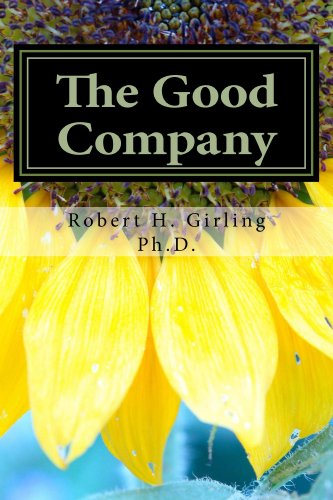
The Good Company
In The Good Company, Business Professor Robert Girling shares twenty inspiring stories of companies that provide a good place to work, heal the world, give back to the community and introduce planet-saving innovations. And here’s the bottom line – Sustainable Companies are profitable.
Professor Girling analyses how companies like Clif Bar, Triodos Bank, Eileen Fisher, TOMS Shoes, Google, Kiva and many more have built triple bottom line business models that serve the community and restore the environment.
The book helps you ponder—and begin to answer—the question: “What can I do to join the march to address the world’s social and environmental challenges?†In the concluding chapter, the author points to the proven keys you need to start a good company.
Many people believe that business needs a new operating system; the old 20th century system is broken. Like no previous generation, we are aware of environmental challenges. We are concerned about global inequalities. We are worried about the state of our communities. More and more, business people are motivated to do something of value for society. There is a groundswell of dissatisfaction with the corporation by customers, employees, shareholders and the community. The idea of the corporation that cares only about the bottom line and profit maximization is becoming as outdated as the typewriter.
Still, many companies, while wanting to do good, remain trapped in an outmoded system which evolved from the halcyon 1920s that views success solely in terms of short-term financial performance. Missing in this equation is the consideration of important customer and societal needs—the depletion of the natural environment, the economic needs of communities, and the need for safe working conditions for employees. As business strategists Michael Porter and Mark Kramer write in the Harvard Business Review, “Business must reconnect company success with social progress…. A narrow conception of capitalism has prevented business from harnessing its full potential to meet society’s broader challenges.â€
Consumers today want businesses to clarify their values. We want to know more about the companies that produce our goods and for whom we work. It’s not enough to know how other business leaders rank companies. We need to know how business decisions affect our communities and the common good. We want to know how the businesses we patronize affect the environment, and how they influence poverty and social welfare.
Likewise, employees today want to work for ventures they believe are contributing to a better world. The idea of simply doing well is not enough; they also want the opportunity to support and work for companies that do good. And they will not be satisfied with less than the opportunity to perform noble work within noble companies. As Ben Cohen and Mal Warwick point out: “When people in business do their jobs in ways that are truly consistent with the fundamental human values of fairness, compassion, respect and reverence for nature, the result is to relegate the profit motive to its proper place—as one, but only one, consideration in guiding business decisions.â€
Certainly all companies grapple with these issues, and many tackle them with integrity. Over 300 companies worldwide have signed on to the UN Global Compact, a voluntary policy initiative for businesses committed to aligning their operations and strategies with ten universally accepted principles in the areas of human rights, labor, environment, and anti-corruption. Yet many other business concerns either reject the value of the common good or embrace it only in the rhetoric of marketing, or as a vague promise to be socially responsible.
Beyond the Fortune 1000, a quiet revolution is occurring. Largely unreported, a growing number of small companies, and a few larger firms, non-profits, and social ventures are reaching out to heal our society and planet. Their efforts address the pressing challenges society faces.