
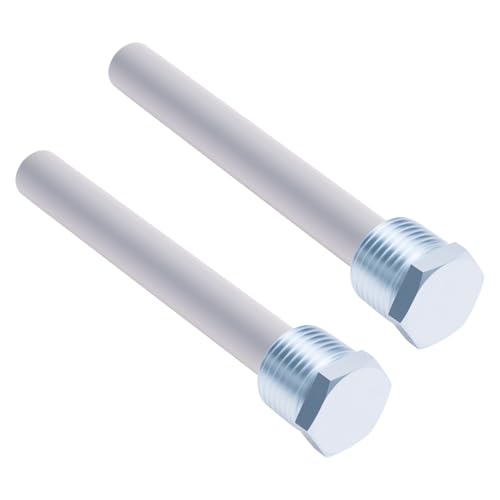
RV Water Heater Magnesium Anode Rod Compatible with Atwood Heaters 11553-4.5”, 1/2" NPT, For RV, Camper and Trailer Water Heaters Replacement Parts
Product Description
RV Water Heater Magnesium Anode Rod Compatible with Atwood Heaters 11553-4.5”, 1/2" NPT, For RV, Camper and Trailer Water Heaters Replacement Parts
- Protects RV Water Heater – Premium magnesium anode rod absorbs corrosive elements inside your hot water tank, preventing rust and extending the life of your RV, camper, or trailer water heater.
- Correct Size & Tapered Thread – Rod measures 0.5" diameter × 4.5" length with 1/2" NPT tapered thread (outer diameter ~20.6 mm). No gasket needed – tapered thread seals tightly to prevent leaks.
- Premium Magnesium Alloy – Made of AZ63 magnesium, softer and more active than steel or aluminum rods, providing stronger and more reliable corrosion protection
- Compatible with Atwood Only – Designed for Atwood RV water heaters . ⚠️ Not compatible with Suburban models, which use 3/4" NPT, 9.25" rods
- Easy Maintenance – Requires a 22mm or 7/8" socket (not included) for installation. Inspect regularly and replace yearly, or when about 75% of the rod is consumed, to keep your water heater running efficiently
Description:
Brand : Poweka
Replace Part Number : 11553
Material: Magnesium
0.5" diameter x 4.5" long
1/2" NPT fits Atwood heaters
Â
Magnesium Anode Rod extends the life of a water heater by attracting corrosive elements in the water, protecting the tank and elements from corrosion. This Anode Rod fits Atwood water heaters.
One of the most common killers of RV water heaters is interior corrosion. The water inside your heater contains many destructive properties including heat and harsh minerals that can build up and eat away at the steel sidings in your tank, shortening the life of your heater and leaving you out in the cold with a sopping mess and broken water heater.
Fortunately, interior corrosion is very preventable. Anode Rods insert into your water heater to help draw those corrosive elements away from the tank and onto the rod itself.Â
Technical Specifications
You might also like

Camco Water Heater Tank Rinser-Cleanses and Removes Sediment that Collects at the Bottom of RV Water Heater, Extends Life of RV Water Heater (11691)

RV Water Heater Magnesium Anode Rod Kit - 9¼ Inch Long for Mor-Flo + Suburban 6, 10, 12 Gallon Tanks

RV Water Heater Magnesium Anode Rod Set - 2-Piece Kit Water Heater Anode Rods with PTFE Tape - Compatible with Suburban and Mor-Flo Water Heater Tanks - 9.25" Length ¾" NPT Threads

Camco 10423 1/2" Temperature and Pressure Relief Valve with 4" Epoxy-Coated Probe
ECO Thermostat Assembly Replace for Atwood 91447 Replacement Part for Water Heater Repair Parts Fit For RV, Motor Home Emergency Cutoff Service Kit
RV Water Heater Anode Rod

Camco Aluminum Anode Rod- Extends the Life of Water Heaters by Attracting Corrosive Elements, Tank Corrosion Protection (11563)

Eleventree 2 Pack RV Water Heaters Magnesium Anode Rod, Extends the Life of Suburban and Mor-Flo Water Heaters Tank--3/4"NPT threads 9.25 length-2pack

Camco RV Vent Insulator And Skylight Cover With Reflective Surface, Fits Standard 14" RV Vents (45192)
Camco 10471/10473 3/4" Temperature and Pressure Relief Valve with 4" Epoxy-Coated Probe